
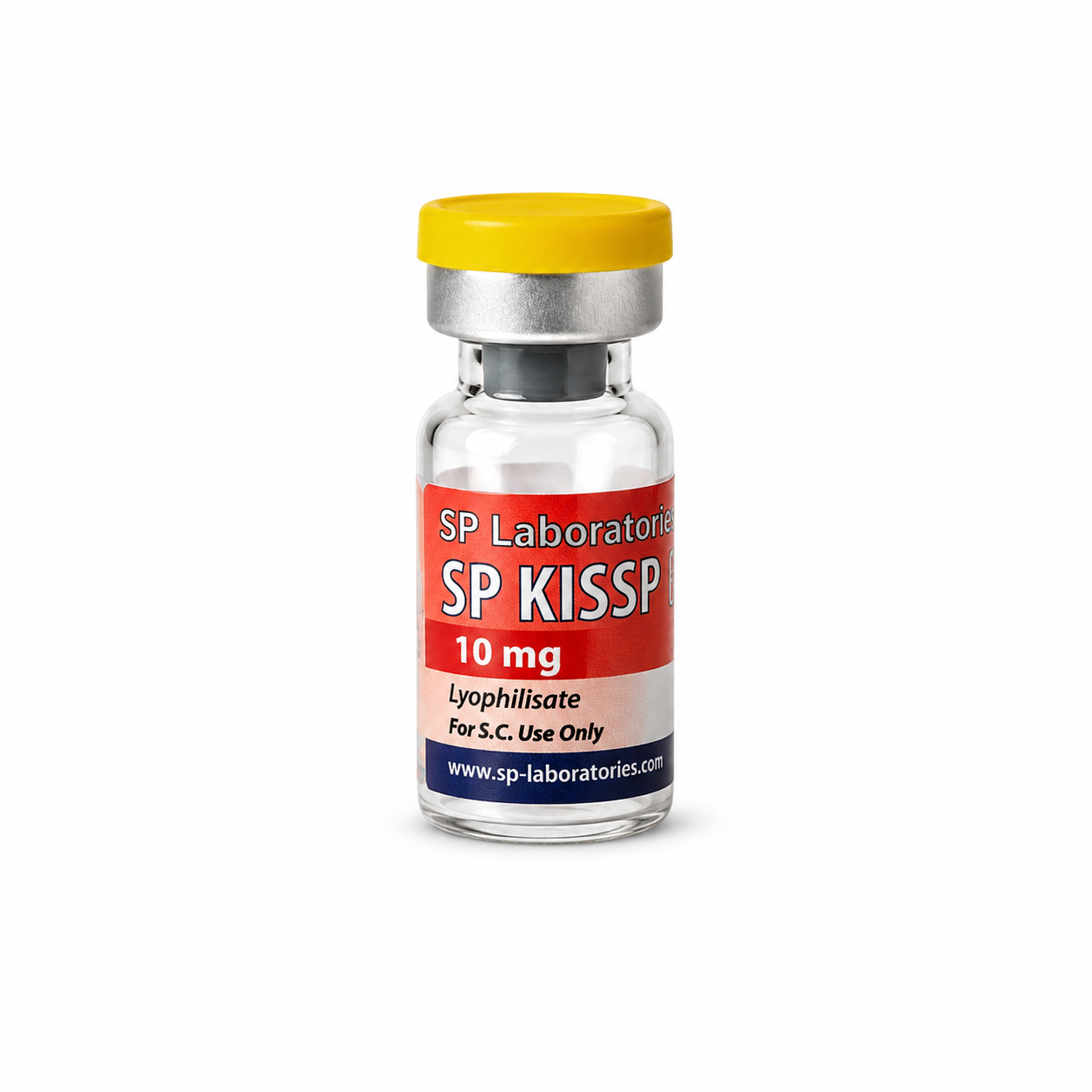
SP Kisspeptin 10mg
$45$60 (-25%)
Package: 1 vial (10 mg)
Active Substance: Kisspeptin
Product Name: SP Kisspeptin
SP Kisspeptin 10 mg – Full Medical Description
Indication
Kisspeptin is a naturally occurring regulatory peptide that plays a critical role in reproductive endocrinology and hormonal communication. SP Kisspeptin 10 mg is primarily used in advanced research and clinical-oriented protocols that focus on natural testosterone production, reproductive health, and optimization of the hypothalamic-pituitary-gonadal (HPG) axis.
Unlike exogenous hormones, Kisspeptin does not replace natural hormone production. Instead, it encourages the body to increase its own hormonal signaling. As a result, many researchers investigate Kisspeptin in protocols involving reduced testosterone levels, impaired hypothalamic activity, age-related hormonal decline, and reproductive dysfunction.
Furthermore, Kisspeptin acts as one of the primary regulators of gonadotropin-releasing hormone (GnRH), making it a key component in the body’s endocrine network. Because of this central role, scientists continue to explore its potential applications in reproductive medicine and hormone optimization.
Contra-Indications
Although Kisspeptin demonstrates a favorable safety profile, certain individuals should avoid its use.
Contra-indications include:
- Known hypersensitivity to peptide-based compounds
- Active hormone-sensitive cancers
- Severe endocrine disorders
- Uncontrolled pituitary dysfunction
- Advanced hypothalamic abnormalities
- Pregnancy and lactation
- Unsupervised fertility treatment protocols
Additionally, individuals with complex hormonal conditions should undergo proper evaluation before beginning a Kisspeptin protocol. Careful screening helps reduce unnecessary risks and improves protocol planning.
Administration
SP Kisspeptin 10 mg is supplied as a lyophilized peptide. Therefore, users must reconstitute the product with bacteriostatic water before administration.
Most protocols utilize subcutaneous injection because this method provides predictable absorption and convenient administration. However, specific protocol structures often vary according to individual goals, hormonal status, and clinical objectives.
Furthermore, many practitioners prefer structured cycles rather than continuous administration. This approach may help preserve receptor responsiveness while maintaining physiological signaling patterns.
Proper sterile technique remains essential throughout both reconstitution and administration. Consequently, users should always follow established handling procedures to protect peptide stability and product integrity.
Medical Action
Kisspeptin serves as a master regulator of reproductive hormonal communication. First, the peptide binds to specific receptors located within the hypothalamus. Subsequently, this interaction stimulates the release of gonadotropin-releasing hormone (GnRH).
Once GnRH enters circulation, it signals the pituitary gland to release luteinizing hormone (LH) and follicle-stimulating hormone (FSH). As a result, the testes receive stronger physiological stimulation for testosterone production and reproductive function.
Through these mechanisms, Kisspeptin may:
- Support natural GnRH secretion
- Promote luteinizing hormone release
- Encourage follicle-stimulating hormone production
- Support endogenous testosterone synthesis
- Enhance reproductive endocrine communication
Unlike testosterone replacement therapies, Kisspeptin operates at the top of the hormonal cascade. Therefore, it works with the body’s natural regulatory systems rather than bypassing them.
Additionally, researchers continue to investigate Kisspeptin’s potential influence on libido, reproductive behavior, emotional processing, and metabolic regulation. Although these areas require further study, early findings suggest that Kisspeptin may exert broader physiological effects beyond reproductive hormone signaling.
Potential Benefits of Kisspeptin
Researchers frequently study Kisspeptin because of its unique position within the endocrine system.
Potential areas of investigation include:
- Natural testosterone support
- Improved endocrine communication
- Reproductive health optimization
- Enhanced LH and FSH signaling
- Support for healthy hormonal balance
- Improved hypothalamic function
- Physiological stimulation of reproductive pathways
Furthermore, Kisspeptin allows researchers to examine upstream hormonal regulation rather than direct hormone replacement. Because of this distinction, many protocols focus on restoring communication within the HPG axis.
Precautions
Careful protocol planning remains important when utilizing Kisspeptin. Therefore, users should monitor key hormonal markers throughout the administration period.
Regular assessment of testosterone, LH, FSH, and related endocrine parameters can provide valuable insight into individual responsiveness. Moreover, these measurements help optimize protocol adjustments when necessary.
In addition, individuals who combine Kisspeptin with other hormone-regulating compounds should proceed cautiously. Simultaneous stimulation of multiple endocrine pathways may amplify biological responses.
Finally, users should store both unreconstituted and reconstituted products according to manufacturer recommendations to preserve peptide stability.
Side Effects
Most studies report that Kisspeptin is generally well tolerated when used appropriately. Nevertheless, some individuals may experience temporary side effects during periods of hormonal adaptation.
Potential side effects include:
- Mild injection-site irritation
- Temporary headaches
- Flushing sensations
- Short-term changes in libido
- Mild mood fluctuations
- Temporary alterations in energy levels
Fortunately, most reactions remain mild and resolve without intervention. Furthermore, many individuals report improved tolerance as the body adapts to changing hormonal signals.
Conclusion
SP Kisspeptin 10 mg represents an advanced peptide designed to support natural endocrine communication through stimulation of the hypothalamic-pituitary-gonadal axis. Rather than introducing hormones directly into circulation, Kisspeptin encourages the body’s own regulatory systems to function more efficiently.
By supporting GnRH, LH, and FSH signaling, Kisspeptin may contribute to physiological testosterone production and reproductive health optimization. Consequently, researchers continue to explore its value within hormone-focused protocols and endocrine restoration strategies.
For individuals seeking complementary peptide support through growth hormone pathways, SP Ipamorelin provides a distinct mechanism of action by targeting growth hormone secretion rather than reproductive hormonal signaling.




Reviews
There are no reviews yet.