
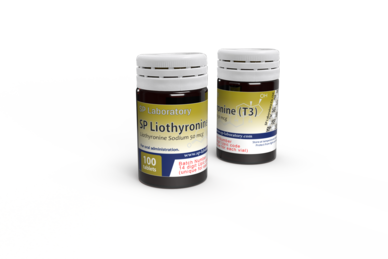
Liothyronine (T3) 50mcg SP-Laboratories
$50
Package: 100 tabs (50mg/tab)
Active Substance: Liothyronine Sodium
Product name: Citomed, Cytomel, T3
Liothyronine by SP-Laboratories
Introduction
In the nuanced field of endocrinological pharmacology, few compounds possess the dual identity of Liothyronine—a molecule revered both in medical thyroidology and the underground world of advanced physique manipulation. Manufactured with precision by SP-Laboratories, this agent represents a biochemical interface between metabolic ignition and hormonal rectification.
Liothyronine Sodium, often abbreviated as T3, is not simply a synthetic echo of thyroid function. It is a molecular directive—one that rewrites the body’s metabolic tempo and orchestrates internal thermogenic symphonies. For those navigating the blurred lines between clinical necessity and performance physiology, Liothyronine emerges as both a restorative force and a sculptural catalyst.
However, this isn’t a compound for amateurs. Misunderstood, it can unravel one’s endocrine core. Understood, it becomes a tool of precise cellular modulation. And SP-Laboratories delivers it in its most reliable oral format, engineered for pharmacological purity and hormonal synchronization.
Medical Action
Liothyronine functions as a synthetic mimic of triiodothyronine (T3), the biologically active thyroid hormone produced primarily by peripheral conversion of thyroxine (T4) within the body. Unlike its sibling thyroxine, T3 acts rapidly and decisively—modulating everything from oxygen consumption rates to mitochondrial respiration, and basal metabolic turnover.
Primary Mechanisms of Action:
-
Thyroid Receptor Agonism: Binds to nuclear thyroid hormone receptors, initiating transcriptional changes in metabolic genes.
-
Enhanced Mitochondrial Efficiency: Increases the number and function of mitochondria in cells, improving energy throughput.
-
Accelerated Carbohydrate, Protein & Lipid Metabolism: Raises systemic turnover, elevating caloric burn and nutrient usage.
-
Neurotransmitter Modulation: Indirectly influences serotonin, dopamine, and noradrenaline sensitivity.
-
Cardiovascular Output Adjustment: Increases cardiac contractility and resting pulse in direct proportion to dosage.
In clinical practice, Liothyronine is a critical tool for addressing hypothyroidism, myxedema, and post-thyroidectomy metabolic dysfunctions. In the sphere of advanced performance enhancement, it has been co-opted—often controversially—for caloric redirection and aesthetic refinement.
Shop this pharmaceutical-grade compound now at BalkanPharm.co and experience clinical precision.
Pharmacodynamics
What sets Liothyronine Sodium apart is its kinetic sharpness. While Levothyroxine (T4) offers a slow, subtle metabolic climb, Liothyronine triggers a sharp elevation in basal metabolic rate (BMR) within hours of administration. This makes it highly efficacious—but equally volatile—if not modulated correctly.
Pharmacokinetic Characteristics:
-
Onset of Action: 3–4 hours
-
Peak Plasma Levels: ~2–3 days with continued use
-
Biological Half-life: ~18–30 hours
-
Oral Bioavailability: ~95%
-
Clearance: Primarily hepatic via glucuronidation
-
Binding Affinity: Low for plasma-binding proteins = higher free hormone activity
Consequently, due to its unbound nature in the bloodstream, Liothyronine exerts more pronounced effects with a lower total serum concentration than T4-based compounds. This results in higher receptor occupancy at lower systemic levels, leading to amplified metabolic outcomes.
SP-Laboratories ensures dosage stability, rapid disintegration, and intestinal absorption optimization within its formulation—essential for predictable therapeutic and aesthetic applications.
Dosage
Administering Liothyronine requires metabolic literacy and endocrine caution. Small deviations in dose can lead to dramatically different biological states—ranging from therapeutic equilibrium to thyroidal chaos.
Clinical Dosing:
-
Initial Hypothyroid Correction: 25mcg/day
-
Maintenance Therapy: 25–75mcg/day based on TSH and T3 blood levels
-
Elderly or Cardiac-Compromised Patients: Begin at 5mcg/day, titrate carefully
-
Monitoring Metrics: TSH, Free T3, resting heart rate, cardiac enzymes
Performance Dosing (Off-label):
-
Initiation Phase: 12.5–25mcg/day
-
Moderate Phase: 50mcg/day split into two administrations
-
Upper Limit: 75mcg/day (requires beta-blocker co-administration in most cases)
-
Tapering Protocol: Reduce by 12.5mcg every 3–4 days post-cycle
Because of the risk of endogenous TSH suppression, most users adhere to short-term deployment cycles, lasting 4–6 weeks maximum. As a result, monitoring is critical. Overexposure to Liothyronine can downregulate thyroid axis responsiveness and induce long-term desynchronization.
Use in Sport and Bodybuilding
While originally synthesized for therapeutic correction, Liothyronine has found controversial acclaim in the bodybuilding and athletic performance world. But it is not a fat burner. It is a catabolic accelerator—a metabolic scalpel that restructures how the body partitions energy, prioritizes fuel sources, and oxidizes substrates.
Physiological Impact in Performance Use:
-
Augments mitochondrial output, allowing enhanced ATP production
-
Increases thermogenic baseline, subtly raising core temperature
-
Promotes nutrient flux away from adipose reserves
-
Reverses caloric stasis during ultra-low intake phases
-
Facilitates reintroduction of metabolic elasticity after diet plateaus
-
Improves absorption of other metabolic agents via enzymatic upregulation
However, the dark side of T3 misuse includes muscle catabolism, neuroendocrine instability, and thyroidal desensitization. The best outcomes are obtained when Liothyronine is implemented with protein-sparing agents (e.g., anabolic androgens) and under tightly monitored nutritional frameworks.
Use as Hormone Replacement Drug for Thyroid Problems
In mainstream medicine, Liothyronine Sodium is prescribed for individuals with impaired T3 conversion, post-thyroidectomy metabolic depletion, or chronic hypothyroid symptoms unresponsive to T4 therapy alone.
Therapeutic Use Cases:
-
Secondary Hypothyroidism – due to pituitary or hypothalamic disorders
-
Thyroid Cancer Survivors – post-ablation metabolic maintenance
-
Resistant Hypothyroidism – patients with low T3 and normal T4
-
Adjunct in Antidepressant Protocols – potentiates SSRI/SNRI outcomes
Additionally, Liothyronine is often combined with Levothyroxine in what is termed “combination therapy”, mimicking the natural output of the thyroid gland (~80% T4, 20% T3). Many patients report improved mental clarity, energy levels, and thermogenic regulation on such regimens.
SP-Laboratories ensures pharmaceutical-grade consistency in each microgram of their formulation—crucial for avoiding overcorrection in delicate endocrine landscapes.
Cycle and Mixting with Other Drugs
Typically, in both clinical and physique contexts, Liothyronine is rarely used in isolation. It often plays a secondary role—a biochemical conductor ensuring that fuel is directed, oxidized, and allocated correctly in alignment with broader objectives.
Stack Synergy Examples:
-
Clenbuterol – for adrenergic metabolic synergy
-
Anavar / Winstrol / Masteron – for anti-catabolic buffering
-
Growth Hormone (HGH) – to prevent T3 depletion from somatotropic elevation
-
Testosterone derivatives – to preserve lean muscle under caloric deficit
-
Metformin – in body recomposition protocols with glucose partitioning goals
-
Nolvadex / Letrozole – during contest prep phases to manage estrogenic drift
Sample Performance Stack (6 weeks):
-
Liothyronine: 25–50mcg/day
-
Anavar: 40mg/day
-
HGH: 4iu/day
-
Clenbuterol: 40–80mcg/day (2 weeks on, 2 off)
-
Letrozole: 0.25mg EOD (as needed)
This configuration allows for high-output metabolic shifts without disproportionately cannibalizing muscle tissue—especially in advanced users with prior experience in thyroid modulation.
Side Effects
Liothyronine’s power is equaled by its potential for disruption. It can rapidly push a euthyroid system into hyperthyroid chaos if not precisely administered and supervised.
For hormone-free supplements that support your goals naturally, visit BalkanFitness.com.
Common Side Effects:
-
Insomnia, nervousness, and agitation
-
Heat intolerance, sweating, elevated basal temperature
-
Tachycardia and palpitations
-
Muscle weakness (from catabolism if unmanaged)
-
Irregular menstrual cycles in females
-
Hair thinning or accelerated shedding
-
Suppression of TSH and endogenous T4/T3 production
-
Increased risk of osteoporosis if chronically overused
Safety Considerations:
-
Never exceed 75mcg/day without endocrinological guidance
-
Co-administer beta blockers if cardiac symptoms emerge
-
Run periodic blood panels (TSH, Free T3, Free T4, Cortisol, Reverse T3)
-
Taper slowly to allow thyroid axis recalibration
-
Avoid concurrent use with amphetamines or sympathomimetic drugs
Liothyronine is not inherently dangerous—it’s dose-dependent, context-sensitive, and rhythmically precise.
Conclusions
Liothyronine by SP-Laboratories is not a stimulant. It is not a trick. It is a molecular metronome, recalibrating how the body interprets fuel, manages energy, and modulates hormonal tempo.
Indeed, in therapeutic settings, it restores lives. In performance arenas, it shapes them. But its use demands intellectual discipline, biological insight, and strategic implementation.
When purity matters—when dosage consistency becomes paramount—SP-Laboratories delivers Liothyronine Sodium in a formulation that respects both the clinician’s precision and the athlete’s ambition.
For those ready to modulate metabolism at its source, this compound offers a direct channel into the thyroidal command center. But the path is narrow, the dose is sacred, and the margin for error is microscopic.


Reviews
There are no reviews yet.